Colonial resistance to the Stamp Act and pressure from London merchants. The Stamp Act 1765 On March 22 1765 the British Parliament passed the Stamp Act to help pay for British troops stationed in the colonies during the Seven Years War.
3 4 Stamp Act Resistance Life Liberty And The Pursuit Of Happiness Openstax Cnx
A tax on all printed materials D.
. November 1 1765. Which describes the stamp act of 1765. A tax on alcoholic beverages.
It was a direct tax imposed by the British government without the approval of the. A tax on alcoholic beverages B. A tax on locally-grown produce C.
Which statement best describes the Stamp Act of 1765. Duties in American Colonies Act 1765. The stakes had risen.
Which of the following best explains why the Stamp Act of 1765 was significant. The passage of the Stamp Act meant that starting on November 1 1765 the colonists would contribute 60000 per year17 percent of the total costto the upkeep of the ten thousand British soldiers in North America. Boston townspeople attacked British soldiers who shot five colonists dead.
Boston harbor was closed to all shipping. 5 George III c. Printed materials included legal docum.
Which describes the Stamp Act of 1765. The Stamp Act of 1765 was the principal internal tax required straightforwardly on American colonists by the British Parliament. Which of the following describes the Revenue Act of 1767.
The Stamp Act of 1765 short title. Added 1222014 45053 AM. It was the first indirect tax imposed on American colonists.
Which statement best describes the Stamp Act of 1765. 1765 British law imposing a tax on all paper used for official documents for the purpose of raising revenue. Which of the following statements describes the stamp act Congress which was held in New York in 1765.
Which of the following best describes the events of the Boston Massacre. In 1765 American resistance to taxation had provoked an argument in Parliament. Because the Stamp Act raised constitutional issues it triggered the first serious protest against British Imperial policy in.
The sugar act regulated trade but its primary purpose was to raise revenue. In 1768 it produced a British plan for. The Stamp Act of 1765 is a tax on all printed materials.
The act which forced a tax on all paper records in the colonies came when the British Empire was paying off its huge debts from the Seven Years War 1756-63 and looking to its North American colonies as an income source. The Stamp Act was passed by. The act required the colonists to pay a tax represented by a stamp on various forms of papers documents and playing cards.
The Stamp Act of 1765 was a tax to help the British pay for the French and Indian War. A tax on locally-grown produce d. Widespread resistance led to its repeal in 1766.
The British felt they were well justified in charging this tax because the colonies were receiving the benefit of the British troops and needed to help pay for the expense. A tax on imported tea c. How did Samuel Adams and the Sons of Liberty express their opposition to the Stamp Act in 1765.
What was the purpose of the Stamp Act of 1765. The act required colonists to pay a tax on all printed material including legal documents and playing cards. The act taxed colonists a certain amount of money per British soldier stationed in the colonies.
Describe the reasons Parliament provided for imposing the Stamp Act. The Stamp Act goes into effect in the colonies March 1766. A tax on all printed materials b.
12 was an act of the Parliament of Great Britain which imposed a direct tax on the British colonies in America and required that many printed materials in the colonies be produced on stamped paper produced in London carrying an embossed revenue stamp. Explain why the colonists objected to these relatively small taxes. It was the last tax Parliament imposed before the Revolution.
It was the first direct tax imposed on American colonists. It was the last tax Parliament imposed before ending all taxes. Gave Canada to Great Britain.
Delegates petitioned against the Stamp Act. How did the stamp act crisis of 1765 compared to the crisis over the town shed duties in 1768. A tax on imported tea.
Assign groups to portions of the.

Stamp Act Fact Reaction Legacy History
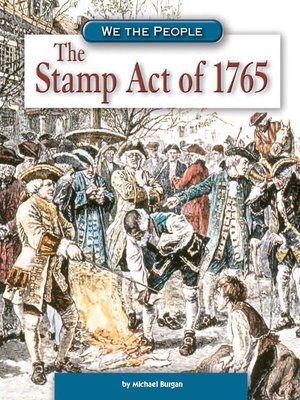
The Stamp Act Of 1765 By Michael Burgan Overdrive Ebooks Audiobooks And More For Libraries And Schools

Stamp Act Fact Reaction Legacy History
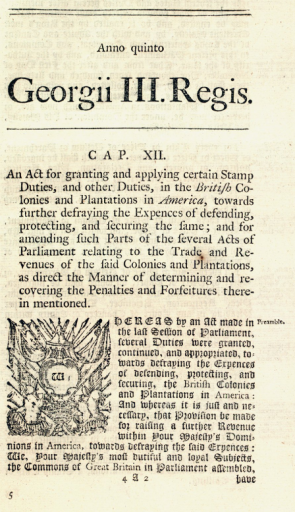
Stamp Act Passed On This Day March 22 1765 Gilder Lehrman Institute Of American History



0 Comments